
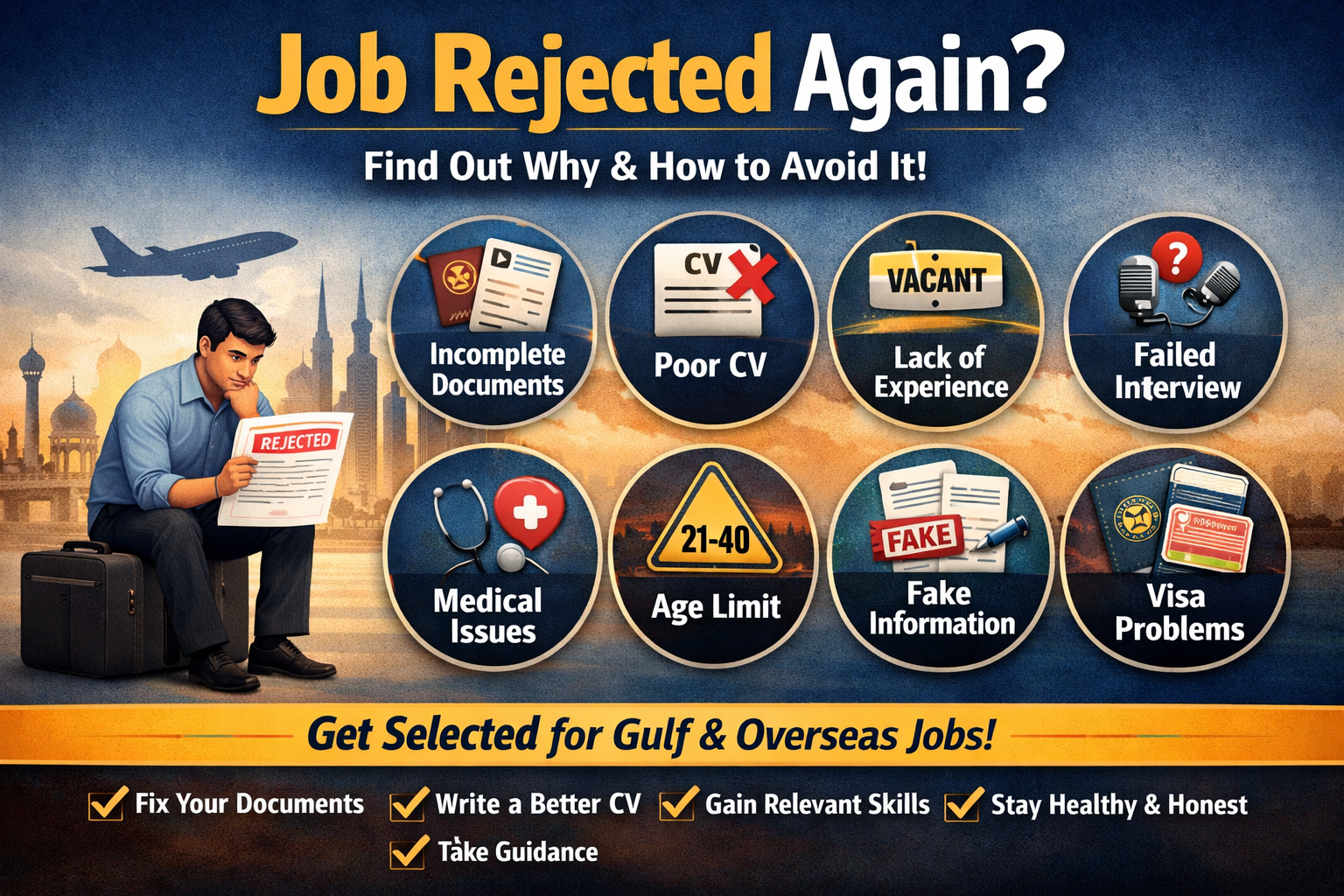
Introduction
Getting rejected from a job can be frustrating, especially when applying for Gulf or overseas opportunities. Many candidates often ask, “Why do I keep getting rejected?”
The truth is, most job rejections happen due to avoidable mistakes. Understanding the real reasons behind rejection can significantly improve your chances of selection.
In this blog, we will explain the most common reasons why candidates get rejected and how you can avoid them.
1. Incomplete or Incorrect Documents
One of the biggest reasons candidates get rejected for overseas jobs is improper documentation.
Common document issues include:
- Expired passport
- Incorrect information in CV
- Missing experience certificates
- Unverified educational documents
- Passport name mismatch
How to Avoid It:
Always double-check your documents before submission. Ensure your passport is valid for at least 6 months and your details match across all documents.
2. Poorly Written CV
Many job applications get rejected because the CV is:
- Too long or too short
- Full of spelling mistakes
- Lacking proper formatting
- Missing job-specific skills
For Gulf jobs especially, employers prefer clear, skill-focused CVs.
How to Avoid It:
- Keep your CV 1–2 pages
- Highlight relevant experience
- Mention technical skills clearly
- Avoid unnecessary personal details
3. Lack of Relevant Experience
Employers prefer candidates who match the job requirements exactly.
For example:
- Applying for a heavy driver position without a valid license
- Applying for a technician role without hands-on experience
How to Avoid It:
Apply only for jobs that match your skills and experience. Sending random applications reduces your credibility.
4. Poor Interview Performance
Even qualified candidates get rejected due to:
- Lack of confidence
- Poor communication
- Not understanding the job role
- Giving unclear answers
For overseas jobs, interviews may focus on:
- Technical knowledge
- Work discipline
- Previous Gulf experience
How to Avoid It:
Prepare before the interview. Understand the job role, practice common interview questions, and dress professionally.
5. Medical Issues
For Gulf countries like Oman, Saudi Arabia, UAE, and Qatar, candidates must pass a medical test.
Rejection can happen due to:
- High blood pressure
- Infectious diseases
- Unfit medical reports
How to Avoid It:
Maintain good health and get a pre-medical checkup before applying.
6. Age Criteria Not Matching
Some overseas jobs have strict age limits.
For example:
- Construction jobs: 21–40 years
- Skilled technician roles: specific age brackets
If you do not match the age criteria, rejection is immediate.
7. Fake or Incorrect Information
Providing false experience or fake documents leads to:
- Immediate rejection
- Blacklisting
- Visa refusal
Employers and embassies verify information strictly.
Always remember:
Honesty increases long-term success.
8. Visa or Travel History Issues
Candidates may face rejection due to:
- Previous visa ban
- Overstay history
- Immigration violations
These factors can directly affect selection.
How to Increase Your Job Selection Chances
If you want to avoid rejection and increase your chances of getting selected:
✔ Prepare proper documentation
✔ Create a professional CV
✔ Apply only for relevant jobs
✔ Maintain good health
✔ Stay honest in your application
✔ Take professional guidance
Final Thoughts
Job rejection is not the end — it’s feedback. Most candidates get rejected not because they are unqualified, but because they are unprepared.
If you understand the reasons behind job rejection and correct them, your chances of securing a Gulf or overseas job increase significantly.
FAQs (SEO Boost Section)
Q1: What is the most common reason candidates get rejected?
Incomplete documents and irrelevant experience are the most common reasons.
Q2: Why do Gulf employers reject job applications?
Mismatch in skills, medical issues, and documentation errors are major reasons.
Q3: How can I avoid job rejection for overseas jobs?
Prepare a proper CV, maintain correct documents, and apply only for suitable positions.